
HIGH-VOLUME AUTOMATED WAREHOUSE EXPANSION CASE STUDY
EXECUTIVE SUMMARY
Facing the challenge of increasing storage and throughput capacity without disrupting ongoing operations, a leading UK-based distributor sought our expertise to expand its automated distribution center (DC).
Due to the success of the initial build, the client required a strategic, phased approach to scaling up automation, improving inbound palletising, and integrating new storage solutions.
Milestone Projects collaborated with global automation leaders to deliver a comprehensive solution, including robotic palletising, pallet shuttle storage, and seamless integration into the existing monorail system—all without interrupting day-to-day operations.
The project demonstrated a 44% increase in storage capacity, a fully automated inbound process, and a system availability rate of 99.9%, ensuring efficiency, precision, and cost savings.
STORAGE CAPACITY
44% increase in storage capacity
AUTOMATION
A fully automated inbound process
SYSTEM AVALIBILITY
System availability rate of 99.9%
INTRODUCTION
Background
A leading UK-based distributor, operating a high-throughput logistics center, required a major expansion to accommodate growing demand from leading retailers.
The company had already successfully moved from multiple manual warehouses into a custom-built, automated high-bay facility but needed additional storage and throughput capacity to keep pace with their business growth.
Key Stakeholders
• The Client – A major UK distributor with high inbound and outbound pallet movements.
• Milestone Projects – Leading warehouse automation integration experts.
• Technology Partners – Including robotic palletising, pallet shuttles, and AMR specialists.
PROBLEM STATEMENT
With a projected 25-50% increase in inventory and throughput, the client’s existing warehouse was reaching full capacity.
Key operational challenges included:
SOLUTION DESIGN
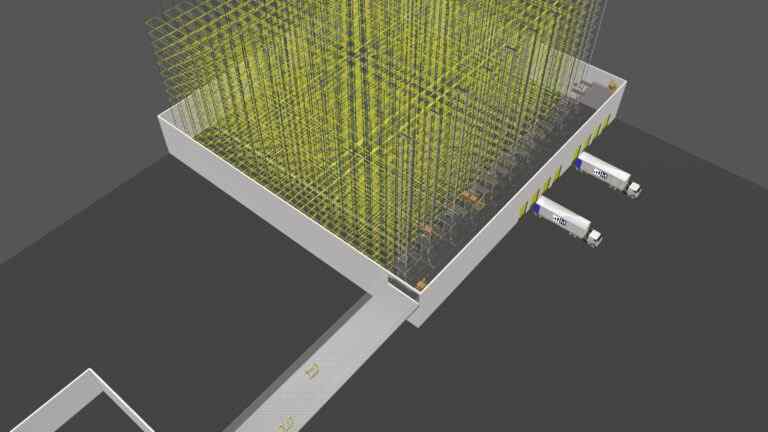
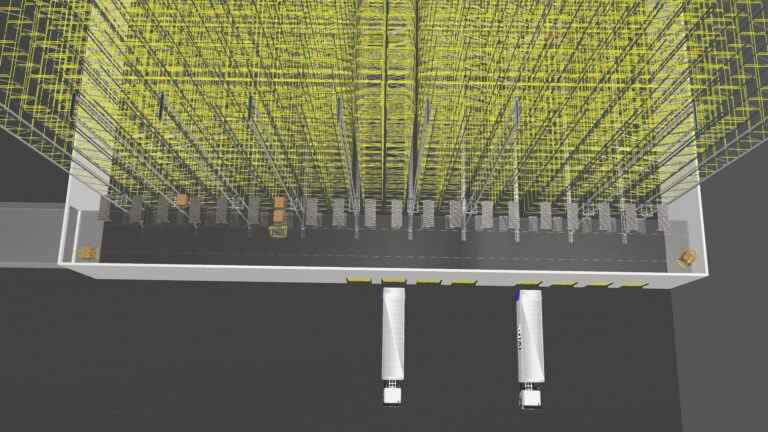
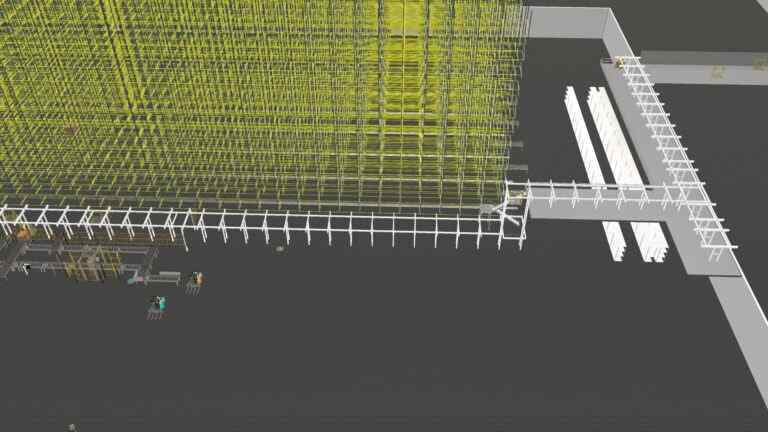
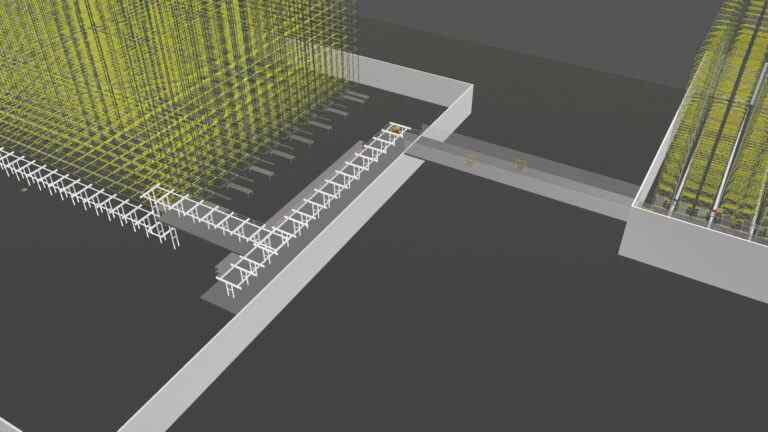
Using our knowledge and data-driven approach, we developed a strategy to integrate best-in-class automation while ensuring seamless expansion in the following areas:
- Robotic palletising systems replace manual handling, reducing rework and increasing throughput.
- 5 Pallet AMRs (Autonomous Mobile Robots) were introduced to move pallets without relying on manual FLTs—a high ROI decision with an estimated payback period of 12 months.
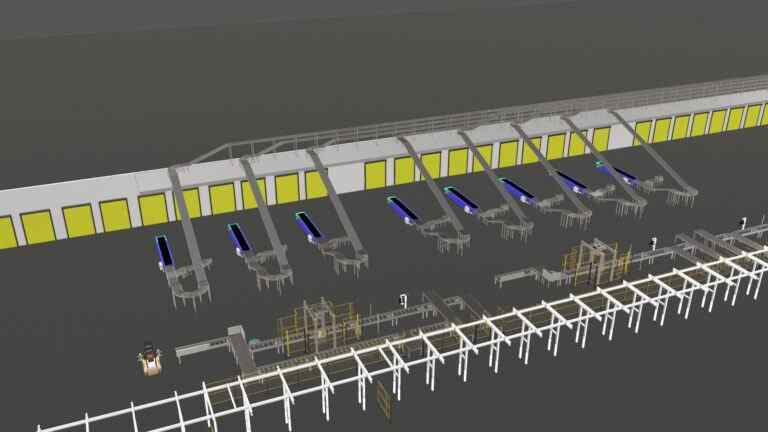
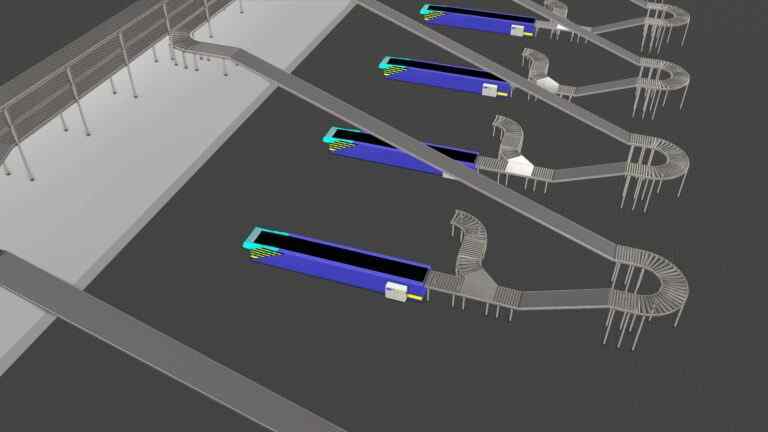
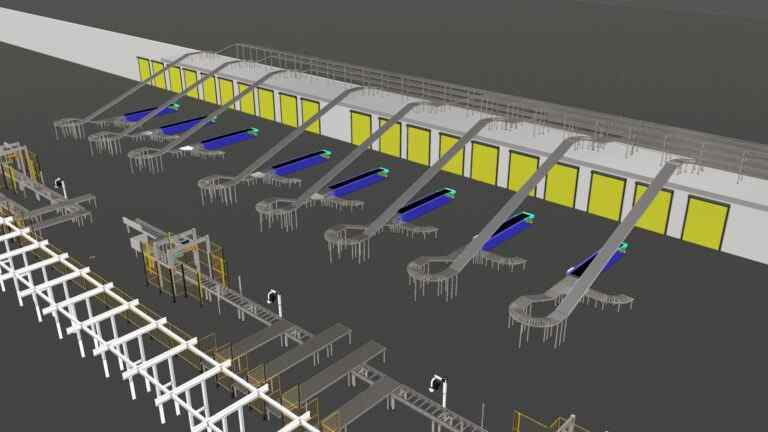
- Telescopic boom conveyors enabled fast, efficient unloading of inbound containers.
- A new 40m high automated high-bay warehouse (DC2) with 20,000 additional pallet locations.
- Pallet shuttle storage system, enabling flexible and efficient inventory handling.
- Seamless integration with the existing monorail system, allowing for automated pallet movement between old and new storage areas.
- Profile check and rework stations to ensure pallet quality before entering automation.
- Real-time data analysis and simulation to validate throughput and optimise system performance.
- M&E Infrastructure (mezzanine, sprinklers, power, data integration) fully incorporated into the scope.
IMPLEMENTATION PROCESS
Phase 1: Data Analysis & Simulation
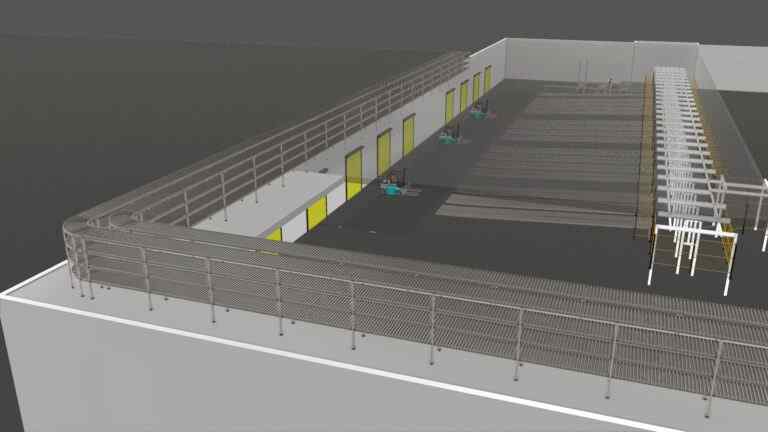
- Milestone analysed existing operations and developed a detailed concept model using 3D models and simulation tools.
- Validated ROI and throughput using simulation tools.
Phase 2: System Design & Engineering
- Defined the URS (User Requirements Specification) for automation and infrastructure.
- Developed detailed integration plans to cut into the monorail system without disrupting operations.
CHALLENGES & SOLUTIONS
Operational Continuity
By phasing deployment we avoided significant disruption.
Labour Shortages & Turnover
Utilising automated inbound handling and AMRs reduced manual dependency.
Pallet Quality Issues
Pre-checking and reworking stations ensured only high-quality pallets entered automation.
Dock Congestion & Port Fees
Higher inbound throughput cleared bottlenecks, avoiding costly storage fees.
RESULTS & OUTCOMES
KEY LEARNINGS & RECOMMENDATIONS
Phased automation deployment ensures a smooth transition while maintaining live operations.
AMRs provide a fast ROI and should be prioritised in warehouse automation projects of this nature.
Seamless integration between existing and new automation is critical for scalability.
Early validation through simulation is essential to optimise throughput and ROI.
Automating inbound palletising reduces errors, improves efficiency, and saves costs.
CONCLUSION
This landmark automation expansion project showcases the power of intelligent warehouse design, automation, and integration.
The seamless transition from manual to automated systems, combined with scalable solutions, has positioned the client for long-term growth, efficiency, and cost reduction.
With this project, Milestone has demonstrated its expertise in large-scale automation while ensuring operational continuity and future scalability.
If you’re looking for an automation solution for your warehouse, or you’re just looking for ways to improve efficiency in your material handling operations, you can see more of our case studies here, or you can get in touch with us with any questions about this project or our services.