
Empowering Women in Engineering: Strategies for Achieving Gender Equality
In the past two to three decades, the engineering sector has evolved beyond what many thought was possible.
Although the industry now largely relies on live data and automation, there is still a requirement for a range of experts with varying skills, opinions, backgrounds, and abilities to solve the issues that this vast adoption of technology may present.
That said, for an industry that requires a diverse group of professionals to meet complex challenges with equally complex solutions, achieving gender equality has been an ongoing test.
Traditionally, men outnumber women in most STEM professions, including engineering, and despite some initiatives to close the gap, there is still a long way to go to truly achieve parity.
As a STEM business, we’re committed to creating an empowering environment for all genders, ethnicities, and backgrounds to achieve their goals within our company.
Gender equality and labour shortages are two of the biggest issues facing our industry today, and in this guide, we’re going to dive into how we can achieve gender equality and what we can do as a business to contribute to a more inclusive sector.
The Current Landscape of Women in Engineering
There has long been a disparity in the STEM industries, with a heavy dominance towards a predominantly male workforce.
The latest statistics from EngineeringUK, show that:
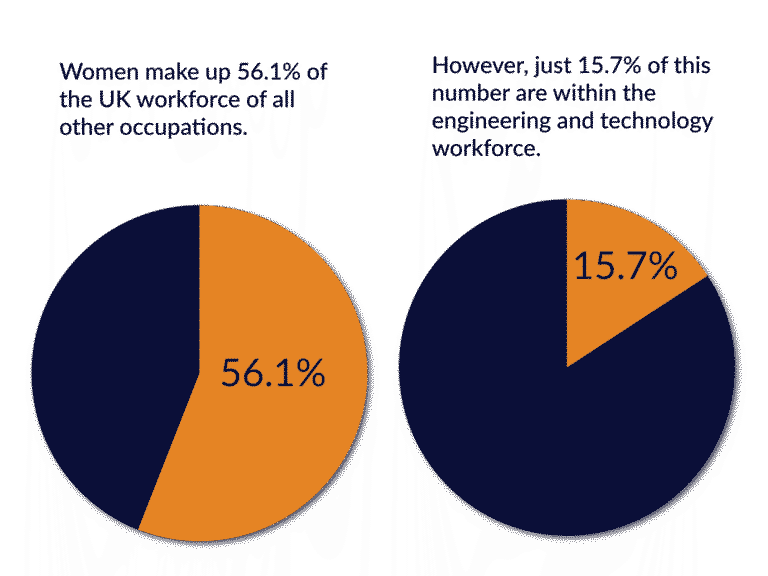
- Women make up 56.1% of the UK workforce of all other occupations.
- In 2022, women represented just 16.5% of those working within engineering and technology, dropping to 15.7% in 2023.
- In 2022, 1,034,000 women were working in engineering and technology occupations compared to 996,000 in 2023.
- In 2023, there were more women in engineering and technology roles between the ages of 16 and 34, highlighting that more women entered the workforce straight out of education but are not being retained.
- The largest drop in female employees within these sectors was between the ages of 35 and 64.
The Engineering Council shows that the average age of women leaving the industry is 43, in stark contrast to men who leave the industry at around 60.
This highlights, that in addition to struggling to attract females to the industry, there is also a difficulty in retaining them too.
As EngineeringUK chief exec Hilary Leevers explains, the figures indicate that companies must work harder to retain the female employees they do have:
The sector as a whole needs to better understand why women are leaving and work harder to improve their retention, including creating opportunities for those who have left the profession to return. The various government skills taskforces must also ensure retention is core to the strategies they are working on.
HILARY LEEVERS, ENGINEERINGUK CHIEF EXEC
Key Challenges Women Face in Engineering
As the statistics quite clearly show the industry is struggling to attract women, but it’s important to delve into exactly why that might be the case:
Gender Pay Gap
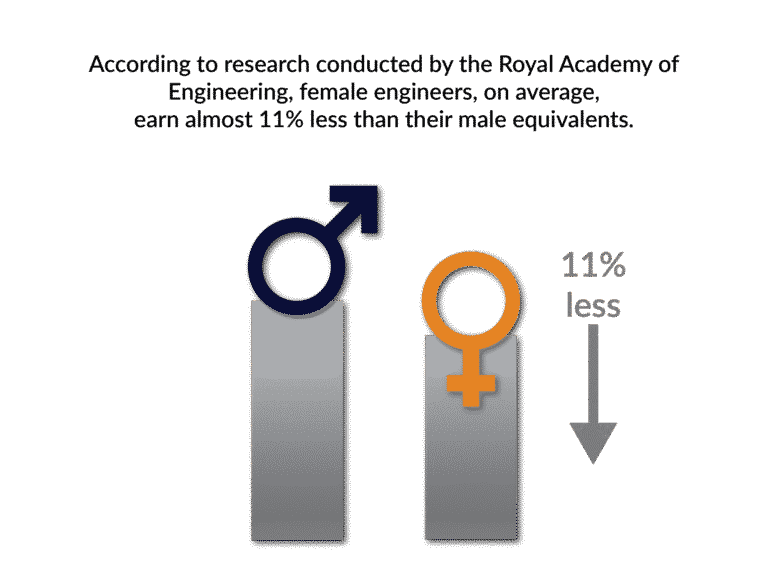
According to research conducted by the Royal Academy of Engineering, female engineers, on average, earn almost 11% less than their male equivalents.
While the gap was far less than initially feared, the research uncovered that this disparity was because there are far fewer females holding down senior or more highly paid positions, which is a cause for concern.
Gender Stereotypes
Engineering, and indeed many other STEM fields, are largely dominated by men, which furthers the stereotype that these roles are better suited to men. This in turn has discouraged many young women from pursuing STEM roles as a viable career path.
The latest statistics show that boys are now considerably outperforming girls in maths and science nationally, with some of the research potentially pointing to a lack of confidence and sense of belonging amongst young women to excel in these subjects.
Our COO Tahnee Treadwell, had this to say “When young women look at STEM and don’t see themselves reflected, the message is clear: ‘This isn’t for you.’”
Tahnee continues, “That silent barrier, built on outdated stereotypes and reinforced by achievement gaps in maths and science, is one we must actively dismantle. It’s not just about equity, it’s about unlocking the full potential of our future workforce.”
Workplace Culture and Gender Bias
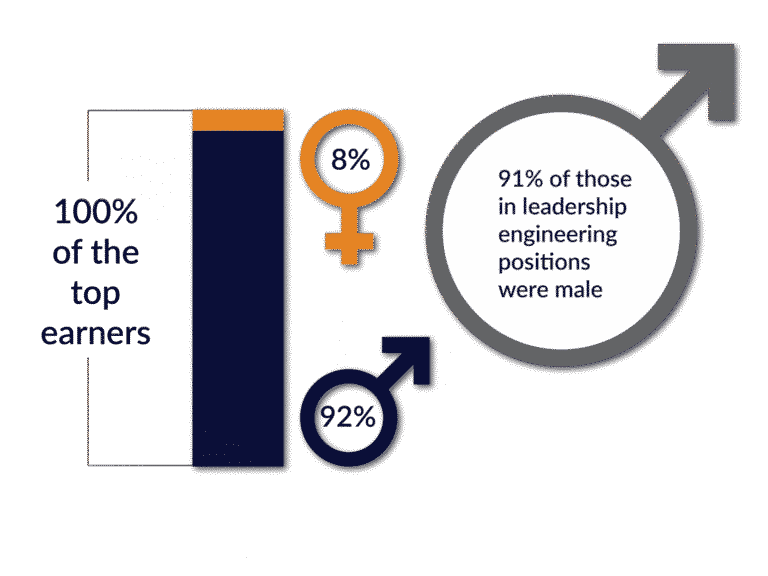
Even young women who aren’t discouraged from pursuing these subjects may become disheartened to find a stark lack of female role models within the engineering world, which of course is not an issue for young men finding their feet in the profession.
After all, 92% in the top earning percentile were men, and 91% of those in leadership engineering positions were male.
Educational Opportunities
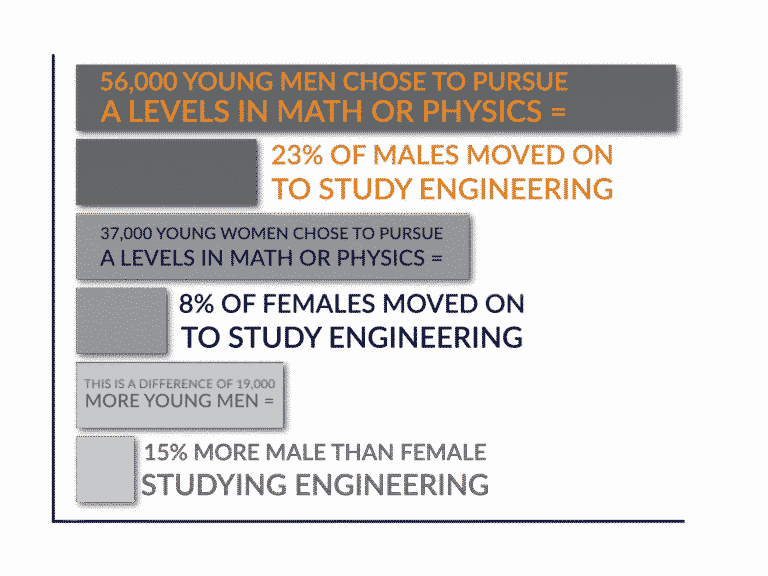
As previously outlined, boys are now outperforming girls in maths and science, and another report from EngineeringUK analysed A-level interest as an avenue for study in engineering and tech.
The statistics for the period of 2020/21 outline the following:
- 56,000 young men chose to pursue A levels in math or physics, compared to 37,000 young women – this is not a huge gap, but one exists nonetheless.
- 23% of males moved on to study engineering or technology in higher education, compared to just 8% of females
Based on these numbers of A Level to undergrad study, a further 150,000 young women would need to study maths, physics, or both at A Level – 115,000 more than currently do – to achieve a similar number of female undergrads as males in these subjects.
This shows us that our goal should be to encourage further uptake of these subjects at A Levels to ensure that young women have further progression opportunities into engineering.
Awareness of the Industry
Another consideration we must address is the overall lack of awareness and promotion of this profession among young women.
There are now more schemes, such as apprenticeships and college courses that allow young people the opportunity for practical training in engineering.
However, there is often a lack of promotion and awareness to highlight the true need for diversity and the multitude of prospects for women in the industry, which may be playing its part in discouraging such a diverse talent pool from entering the sector.
We firmly believe that the industry is something that should be promoted to young women to highlight the incredible opportunities there for them in STEM and STEM-focused businesses like Milestone.
Promotion Aspirations & Family Balance
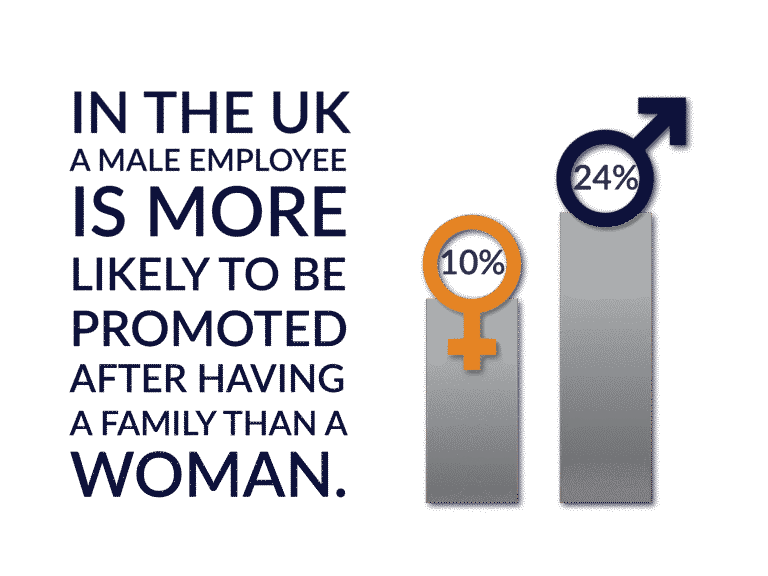
According to recent research from the Hays Gender Diversity Report in 2017, women are far more likely to search for part-time work or stay in the same position after giving birth.
However, a male counterpart is more than twice as likely to be promoted after having a family. The report focusing on UK professionals shows that 24% of men were promoted after starting a family, compared with just 10% of women.
Could this, combined with the lack of female figures in senior roles, be a contributing factor to the increase in women leaving the profession from the age of 35 onwards?
It’s absolutely key to uncover why these disparities exist and address how we may push for a more inclusive sector, that not only embraces gender diversity but also celebrates the unique perspectives that women can bring to the industry.
The Role of Mentorship & Networking
To appreciate the impact that mentorship has in such a male-dominated environment, it’s crucial that we truly understand the challenges we’ve outlined above.
Historically, in most professions, there was a perception that only a few women could reach the top – otherwise known as the ‘Glass Ceiling’. This often meant that other women were seen as competitors, rather than supportive and nurturing figures for each other.
Of course, this assumption is false and in the modern workplace female support can create an incredible platform to ensure that we all succeed together.
At Milestone, our staff across every department in our business is predominantly made up of females. We’re incredibly proud that we’ve developed a company where everybody, regardless of gender, ethnicity, or background can lean on each other for support to develop a platform for our success on both a business and personal level.
Why is it so crucially important for mentorship and networking in our industry?
Creating a Space for Women to Thrive
Creating a safe space is absolutely essential for producing an environment conducive to innovation and curiosity.
A mentor in this sense, can contribute more than simply offering advice and guidance – although this is crucially important – they can create an atmosphere where women can confidently thrive and achieve their potential in an atmosphere where different perspectives are respected and celebrated.
“When women feel safe to speak up, ask questions, and bring their whole selves to work, that’s when real innovation happens.“ Says Louise Hughes, our Project Coordinator, who has spent much of her working life within a STEM environment.
Developing Pathways for Growth & Advancement
Mentorship plays an important role in growth and advancement in any role, but as we’ve explored in this piece, it can be critical in a STEM business.
Increasing initiatives that aim to bolster women in leadership, offering advanced, tailored training, and highlighting work-life balance are likely to be crucial in opening new pathways.
Leaning on Each Other
A strong mentor, regardless of gender, understands that they must serve as a facilitator to allow women to uncover their inner strengths, creating collaboration and empowerment.
Building Professional Networks
Great mentors do more than give advice, they create space and confidence to grow, for ideas to be heard, and for potential to be realised.
Louise Hughes, Project Coordinator at Milestone Projects
The right mentor can open doors that create connections to other women in engineering and professional engineering bodies that aim to promote women in the sector.
Bodies such as Women in Logistics, The Society of Women Engineers, and Women in Engineering ProActive Network help women in the industry make new connections and foster a feeling of togetherness.
“Great mentors do more than give advice, they create space and confidence to grow, for ideas to be heard, and for potential to be realised,” says Louise. “That kind of support doesn’t just help women thrive, it lifts the entire team.”
She adds, “For women in this industry, it’s so important that doors are opened, not just to opportunities, but to real connections. Expanding networks and building relationships with other women in the field can be a game-changer for growth, confidence, and long-term success.”
Gender-Inclusive Practices
Across all of our departments, such as Realisation, Marketing, HR, Finance, and Facilities, we know how important balance within these teams is to ensure we have a diverse team that can bring various experiences and opinions to the table.
Whenever we look to hire a new member of our team, our HR department employs of number of techniques to ensure that we can continue to push for gender diversity and advocate for change in our industry:
Being Aware of Wording & Tone
The words spoken and the way they are communicated carry significant weight in the context of gender inclusivity. Much of gender bias in society is unintentional, however, this doesn’t mean we shouldn’t be mindful of how our words might be interpreted.
Recent research from Samsung UK found:
- 80% of employees are using biased language on average four times a week.
- 46% of respondents felt that gender-biased language is prevalent in their workplace.
- 40% have experienced gender bias during meetings and one in three have experienced this in an interview situation.
Our goal is to celebrate and champion women in a variety of roles within our business.
While we fully support events such as International Women’s Day and International Women in Engineering Day, we know how crucial it is to celebrate women, not just for one day, but every day.
“Biased language, especially when left unchecked, can subtly influence how individuals feel about their place at work,” explains Tahnee, “this is something we work really hard to avoid.”
“It’s crucial to be mindful of the words we use and the environments we foster, especially in industries like this, where male dominance still shapes much of the culture.”


Actively Work Towards Difference
We’ve extensively outlined how difficult it is to recruit women into senior positions in the industry, equally as challenging is the conundrum of how to retain them.
Of course, we now know that much of this is down to gender bias, and perceived barriers to entry, particularly for those who have had time away from the industry to start a family.
These issues are often compounded by a lack of confidence in returning to work, which is experienced by 31% of mothers after maternity.
If any business in this space is truly committed to enhancing diversity and improving progression opportunities, it’s crucial to address these barriers in order to create a supportive atmosphere.
The introduction of diverse policies that support women at work and inspire the next generation is crucial.
At Milestone, our HR Department has employed numerous options, such as no-questions-asked absence and flexible working hours, and we’re currently exploring more comprehensive options for paternity and maternity as we continue to grow.
Lead From the Front
At Milestone, everything we do is underpinned by a strong set of values – we don’t just showcase what we do, but rather why we do it.
Business leaders of all kinds should strive to develop a strong culture, driven by values that can ultimately allow the business to become a shining light in their industry.
We’re not the only ones to share this belief – a recent poll on equity, diversity, and inclusion by Robert Walters confirmed that 51% of employers believe that strong diversity policies can help attract employees with unique skill sets into their workplace.
How Do We Move Towards Gender Equality?
To truly make a difference when it comes to gender equality in STEM and engineering, it’s crucial to develop and implement a carefully managed strategy that outlines a commitment to gender equality.
Although the list below isn’t exhaustive, here are some strategies to help move your business toward this:
Educational Outreach
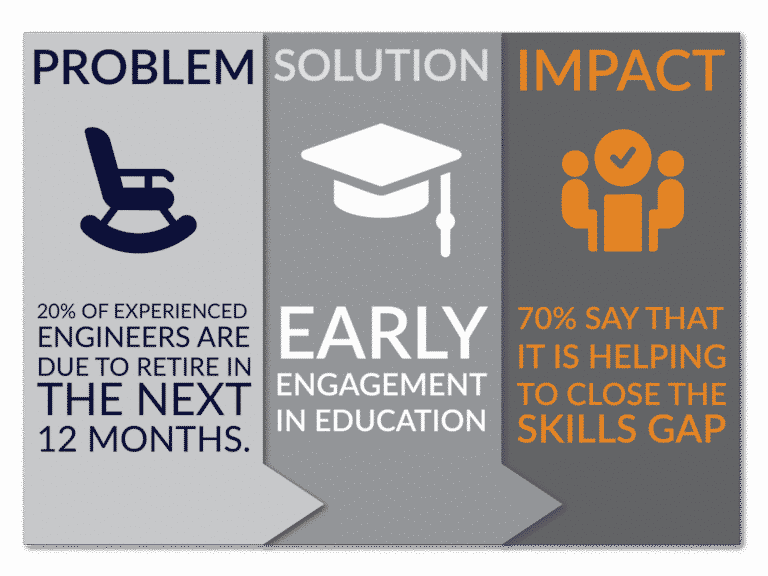
Changing attitudes towards STEM and engineering careers starts with the grassroots.
One of our goals in the near future is to partner with schools, colleges, and, other educational institutes to deliver apprenticeships and internships as well as practical talks, seminars, and presentations to highlight the benefits of choosing careers in STEM.
Recent research shows that 83% of businesses that engage in early years education are improving their talent pipelines, with 86% saying that these efforts are encouraging young people to apply for roles within their sector.
Most encouragingly, 70% say that it is helping to close the skills gap, a considerable issue in the engineering sector with more than 20% of experienced engineers are due to retire in the next 12 months.
Gender-Neutral Job Posts
Studies show that ‘masculine job posts’ are deterring women from applying for roles. In an industry looking to encourage women to join the sector, we must be framing the industry in the most inclusive way possible.
Less than half of women have chosen to apply for a job post that used ‘male-coded’ words, which shows us that more work must be done to ensure we’re moving towards gender-inclusive recruitment strategies.
Highlight Female Leaders
When young women see other women in leadership roles, it creates a sense of possibility and belonging. Without those role models, it’s easy for the message to be unintentionally sent that these industries aren’t for them.
Tahnee Treadwell, COO at Milestone Projects
In industries dominated by men, such as engineering, applying for a role can feel intimidating if there is no one within that business’s leadership team that applicants can relate to.
A lack of female role models can often send an unintended message that this sector isn’t suitable.
By publicly committing to diversity goals, you can create a professional atmosphere that reaps the rewards of inclusivity and attracts the best talent, regardless of gender.
Statistics show that 60% of women are heavily influenced by the presence of female leaders within a business.
Offer Flexibility

Offering flexible working, remote working options, and extended parental leave, are all highly prized, particularly for women in the workplace.
38% of women with young children state that without this flexibility, they would need to leave their current role or reduce their working hours – which is not an acceptable outcome.
By establishing flexible options and creating a culture of trust around them, women can balance their working and personal lives far more effectively. This in turn leads to improved well-being, work/life balance and, most crucially, maintaining more women in the industry.
Frequent Pay Reviews
As we already know, men are more likely to be the beneficiaries of higher wages in this industry. This is why it’s crucial to ensure that businesses in this space are regularly reviewing wages and pay gaps to ensure wage equity.
Conclusion
In conclusion, achieving gender equality in the engineering and STEM sectors requires a collective effort to break down barriers, foster inclusivity, and create environments where everyone, regardless of gender, feels valued and supported.
As we’ve explored, while progress is being made, there is still much work to be done to ensure that women not only enter the industry but also stay, grow, and thrive within it.
By championing diverse leadership, implementing inclusive recruitment practices, offering mentorship and networking opportunities, and ensuring policies that support work-life balance, we can begin to shift the landscape towards a more equitable future.
At Milestone, we are committed to not just talking about these changes but actively creating pathways that empower women at every stage of their careers.
The future of engineering and logistics will be stronger, more innovative, and more resilient if we build an industry that embraces and celebrates the contributions of all its members.
Together, we can lead the way towards a more inclusive, diverse, and sustainable sector for everyone.
If you’d like more information on anything we’ve covered in this blog, or you’re interested in hearing about our latest employment opportunities, why not get in touch with us today to find out more?

By Tahnee Treadwell
COO
Tahnee Treadwell is the Chief Operating Officer at Milestone Projects, where she leads with a people-first mindset to build agile, high-performing teams.
She’s shaped the company’s operational backbone, overseeing everything from HR and finance to marketing and growth strategy, ensuring alignment with the company’s vision and values. A strong advocate for gender inclusion in STEM, Tahnee develops her teams with purpose and integrity.